Introduction
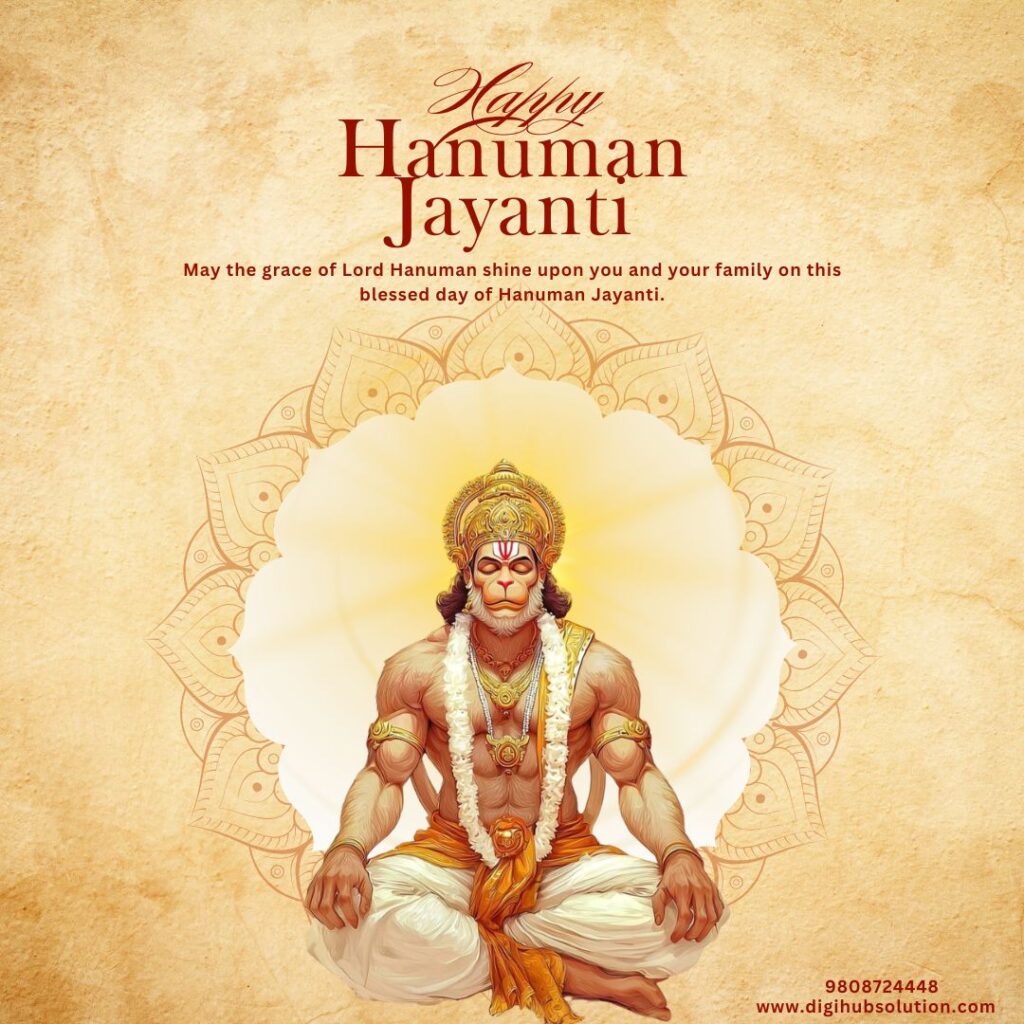
Hanuman Jayanti is one of the most sacred and widely celebrated Hindu festivals, observed to commemorate the birth of Lord Hanuman, the embodiment of strength, devotion, courage, and selfless service. Celebrated across India and in many parts of the world, this auspicious occasion holds immense religious, cultural, and spiritual importance.
Lord Hanuman, also known as Bajrangbali, Pavan Putra, and Sankat Mochan, is revered as the greatest devotee of Lord Rama and a symbol of unwavering faith and dedication. Hanuman Jayanti is not merely a festival—it is a celebration of divine qualities that inspire humanity to live a life of discipline, devotion, and righteousness.
- Date and Timing of Hanuman Jayanti
Hanuman Jayanti is celebrated on the full moon day (Purnima) of the Hindu lunar month of Chaitra, which usually falls in March or April.
In different regions of India, the date may vary based on local traditions and calendars. In North India, it is typically observed on Chaitra Purnima, while in some South Indian states, it may be celebrated on different dates such as Margashirsha Amavasya.
This variation reflects the cultural diversity of India and the deep-rooted regional traditions associated with Lord Hanuman.

2. Historical and Mythological Background
Birth of Lord Hanuman
According to Hindu mythology, Lord Hanuman was born to Mata Anjana and Kesari, the king of the Vanaras. He is also known as the son of Vayu (Wind God), hence the name Pavan Putra.
It is believed that Mata Anjana performed intense penance to please Lord Shiva, who blessed her with a divine child. Many scriptures describe Hanuman as an incarnation or aspect (Rudra Avatar) of Lord Shiva, born to assist Lord Rama during the Treta Yuga.
Another popular legend states that during King Dasharatha’s yajna, a divine offering reached Anjana through Vayu, resulting in the birth of Hanuman.
Childhood Legends of Hanuman
Lord Hanuman displayed extraordinary powers even as a child. One of the most famous stories tells how he mistook the sun for a fruit and leapt into the sky to swallow it. This act demonstrated his immense strength and divine nature.
However, due to his playful mischief, sages placed a curse on him, causing him to forget his powers until reminded. This story symbolizes the hidden potential within every human being.
3. Hanuman in the Ramayana
Lord Hanuman plays a central role in the epic Ramayana, where he is depicted as the most devoted follower of Lord Rama.
Key Contributions:
- Discovering the location of Goddess Sita in Lanka
- Burning Lanka with his fiery tail
- Carrying the Sanjeevani mountain to save Lakshmana
- Acting as a messenger, warrior, and servant of Lord Rama
His character represents perfect devotion (bhakti), loyalty, and selfless service.
4. Significance of Hanuman Jayanti
Hanuman Jayanti holds deep spiritual meaning. It is believed that worshipping Lord Hanuman on this day removes obstacles, fears, and negative energies.
Symbolism of Lord Hanuman:
- Strength (Physical & Mental)
- Courage & Fearlessness
- Devotion & Loyalty
- Wisdom & Discipline
- Protection from evil forces
Lord Hanuman is also considered one of the Ashta Chiranjeevi (immortal beings) who still exist and protect devotees.
5. Spiritual and Philosophical Importance
Hanuman Jayanti is more than a religious celebration—it is a reminder of timeless spiritual values:

Key Teachings:
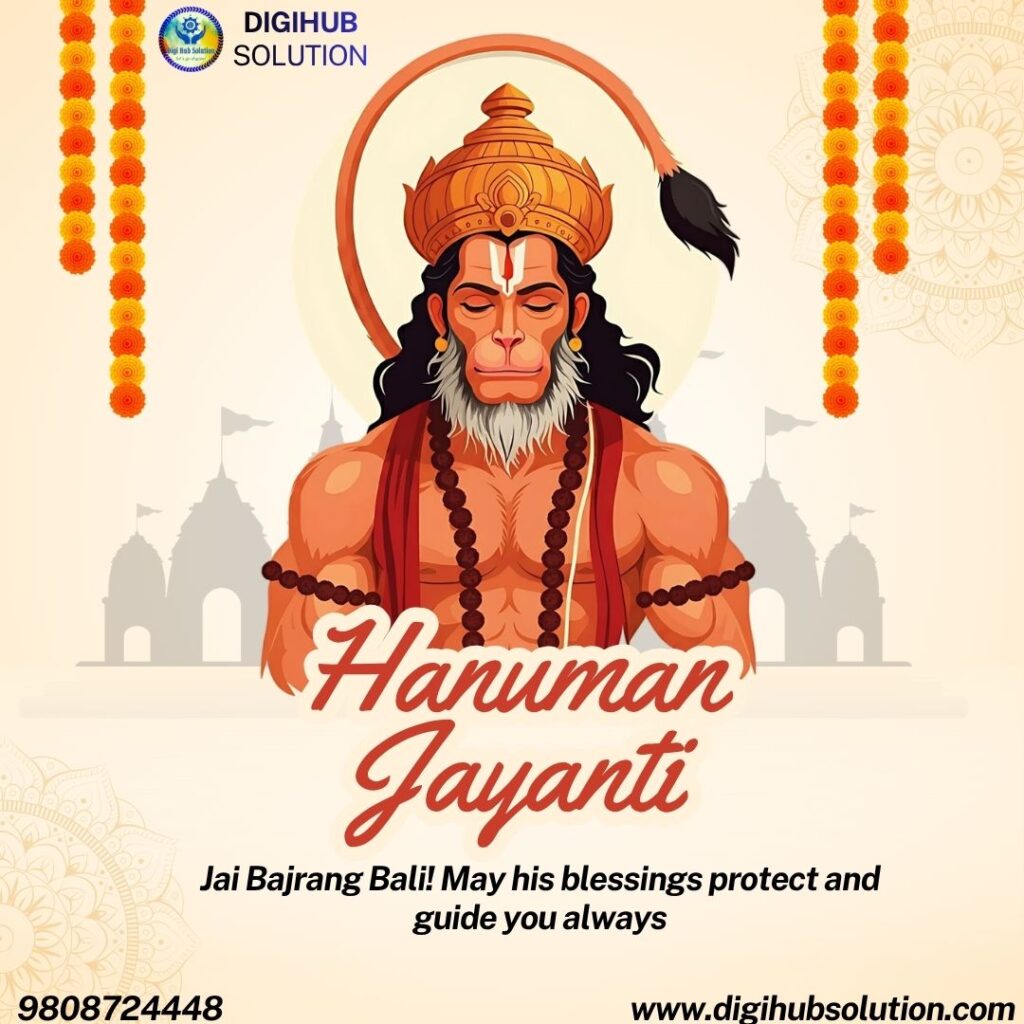
- True strength lies in humility
- Devotion is greater than power
- Service to others is service to God
- Faith can overcome any obstacle
Hanuman’s life teaches us how to control the mind, remain disciplined, and stay devoted to righteousness.
6. Rituals and Celebrations
Temple Worship
Devotees visit Hanuman temples early in the morning and offer prayers, flowers, and sweets.
Fasting (Vrat)
Many devotees observe fasts to purify the body and mind.
Recitation of Sacred Texts
- Hanuman Chalisa
- Sundar Kand
- Ramayana
These recitations are believed to bring peace, strength, and protection.
Special Offerings
- Sindoor (vermilion)
- Jasmine oil
- Laddoos and fruits
Aarti and Bhajans
Devotional songs and aarti are performed in temples and homes.
Charity (Seva)
Distributing food and helping the needy is an important part of the celebration.

7. Regional Variations in Celebration
Hanuman Jayanti is celebrated differently across India:
North India
- Observed on Chaitra Purnima
- Grand temple celebrations and processions
Maharashtra
- Community events and spiritual gatherings
South India
- Celebrated on different dates
- Special temple rituals and pujas
Karnataka & Tamil Nadu
- Recitation of scriptures and temple festivals
8. Famous Hanuman Temples in India
Some of the most important temples include:
- Sankat Mochan Temple (Varanasi)
- Hanuman Garhi (Ayodhya)
- Jakhu Temple (Shimla)
- Mehandipur Balaji (Rajasthan)
- Salasar Balaji (Rajasthan)
These temples witness huge gatherings during Hanuman Jayanti.

9. Astrological Importance
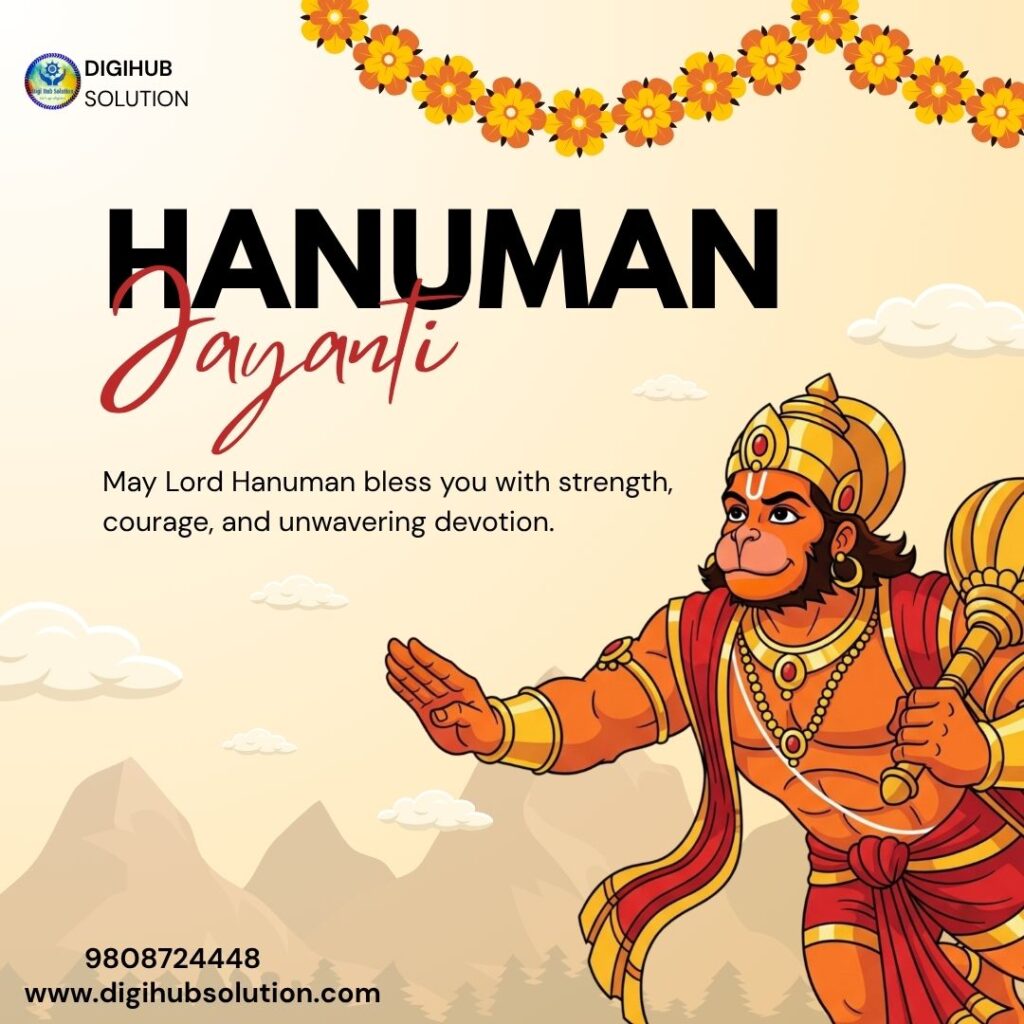
In astrology, Lord Hanuman is associated with planet Mars (Mangal), which represents strength, energy, and courage. Worshipping Hanuman is believed to reduce the negative effects of Mars and other planetary doshas.
10. Scientific and Psychological Perspective
From a modern perspective, Hanuman symbolizes:
- Inner strength and mental resilience
- Focus and discipline
- Emotional stability and fearlessness
The practices followed during Hanuman Jayanti—such as chanting, fasting, and meditation—have scientifically proven benefits like stress reduction and improved concentration.
11. Cultural Importance
Hanuman Jayanti strengthens:
- Community bonding
- Cultural traditions
- Spiritual awareness
The festival brings people together through prayers, processions, and celebrations.
12. Hanuman Chalisa and Its Importance
The Hanuman Chalisa, written by Tulsidas, is one of the most powerful devotional hymns dedicated to Lord Hanuman.
Benefits of Recitation:
- Removes fear and negativity
- Improves mental strength
- Brings peace and success
13. Hanuman as a Universal Symbol
Lord Hanuman is not just a religious figure but a universal symbol of:
- Loyalty
- Discipline
- Courage
- Devotion
His teachings are relevant even in modern life.
14. Message of Hanuman Jayanti
The festival teaches us to:
- Stay humble despite power
- Serve others selflessly
- Remain devoted to truth
- Face challenges with courage
15. Conclusion
Hanuman Jayanti is a festival that celebrates devotion, strength, and righteousness. It inspires millions of people to follow the path of truth and selfless service. By remembering Lord Hanuman, devotees seek not only blessings but also guidance to live a meaningful and disciplined life.