Navratri is one of the most auspicious and widely celebrated festivals in India, symbolizing devotion, positivity, and the divine feminine energy. The word “Navratri” means nine nights, during which devotees worship the nine forms of Goddess Durga, collectively known as Navdurga. Each day of Navratri is dedicated to a different form of the Goddess, representing various qualities such as strength, courage, wisdom, purity, and compassion. This spiritual journey reflects the transformation of the human soul from ignorance to enlightenment. During these sacred days, devotees observe fasts, perform rituals, chant prayers, and immerse themselves in devotion. The festival is also known for its vibrant cultural celebrations like Garba and Dandiya, bringing people together in joy and unity.
Navratri signifies the eternal victory of good over evil. It inspires us to eliminate negativity, ego, and fear from our lives, and encourages us to walk on the path of truth, righteousness, and inner strength.
Nine Days of Spiritual Growth, Strength, and Positivity
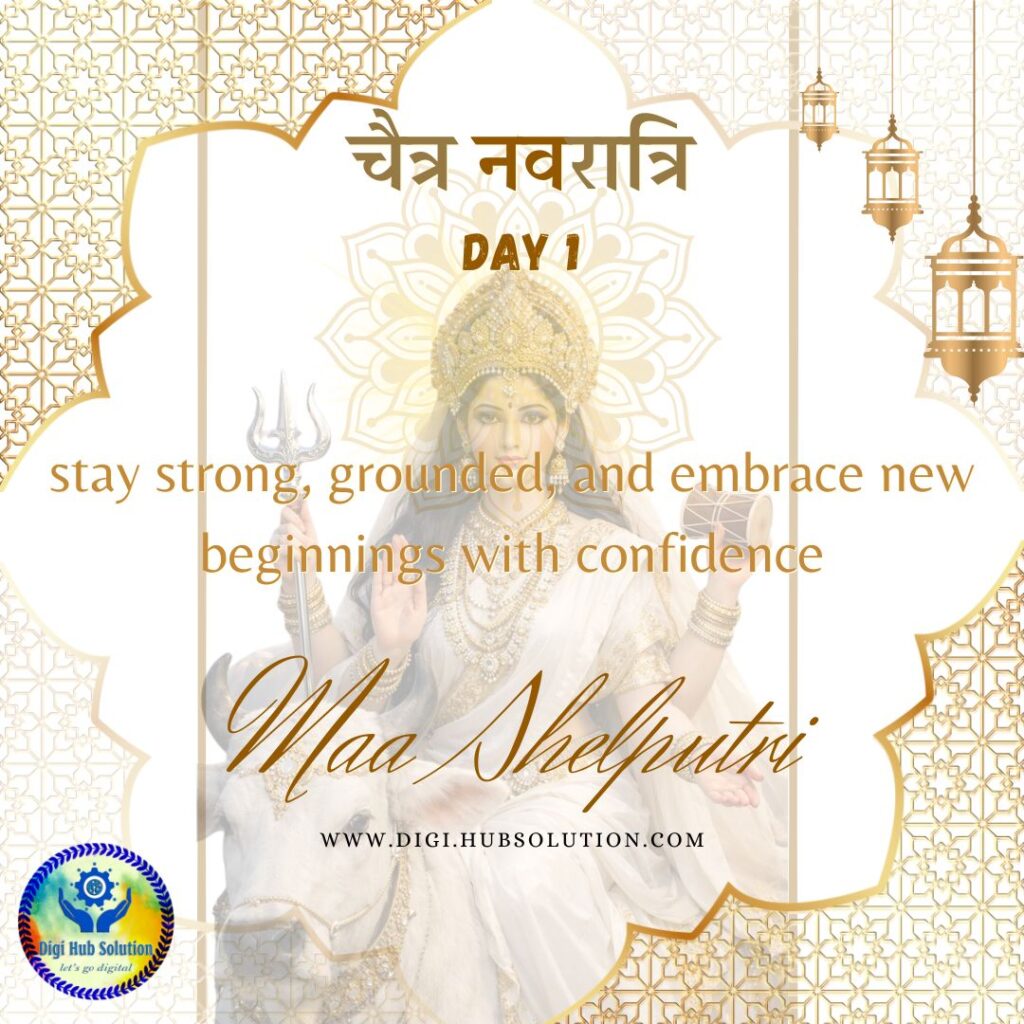
🌸 Day 1 – Maa Shailputri
Maa Shailputri is the first form of Goddess Durga worshipped on the opening day of Navratri. Her name means “Daughter of the Mountain” (Shail = mountain, Putri = daughter), as she was born to King Himavan. She is depicted riding a bull (Nandi) and holding a trident and a lotus in her hands. Maa Shailputri symbolizes purity, strength, and the beginning of spiritual awakening. She is also considered the reincarnation of Goddess Sati. Worshipping her brings stability, courage, and devotion in life. She inspires devotees to stay grounded, face challenges with determination, and start their spiritual journey with faith and positivity. Maa Shailputri, the daughter of the Himalayas. She symbolizes the beginning of a spiritual journey and represents strength, purity, and stability.
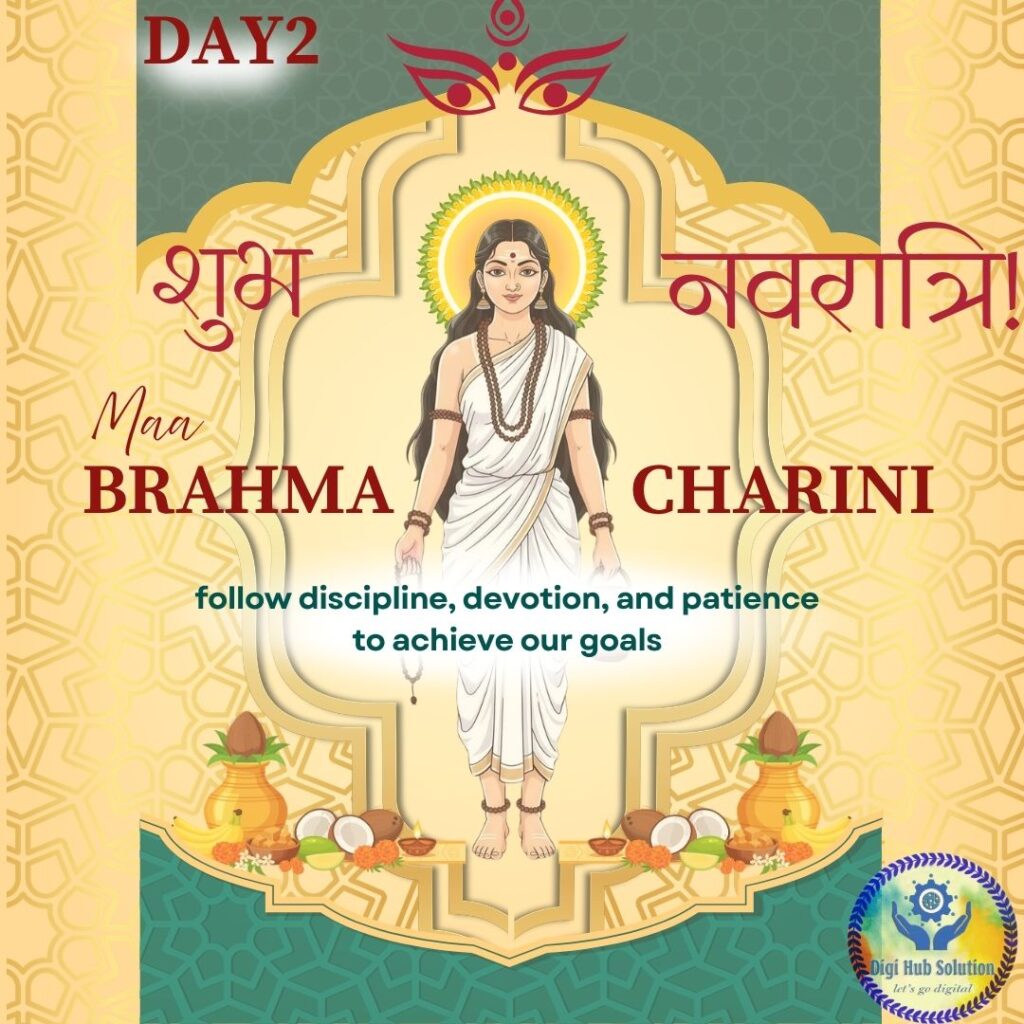
Day 2 – Maa Brahmacharini
Maa Brahmacharini is the second form of Goddess Durga, worshipped on the second day of Navratri. Her name means “the one who follows a life of penance and devotion.” She is depicted walking barefoot, holding a rosary (japa mala) in one hand and a water pot (kamandal) in the other. Maa Brahmacharini symbolizes dedication, self-discipline, and spiritual knowledge. She performed intense penance to attain Lord Shiva as her consort. Worshipping her blesses devotees with patience, strength, and wisdom. She teaches us the importance of hard work, sacrifice, and unwavering faith in achieving our goals and moving forward on the path of spirituality. Maa Brahmacharini represents devotion, penance, and dedication. She is the embodiment of austerity and teaches us the value of patience, self-control, and determination. Her blessings help individuals stay focused on their goals and overcome hardships through discipline and faith.
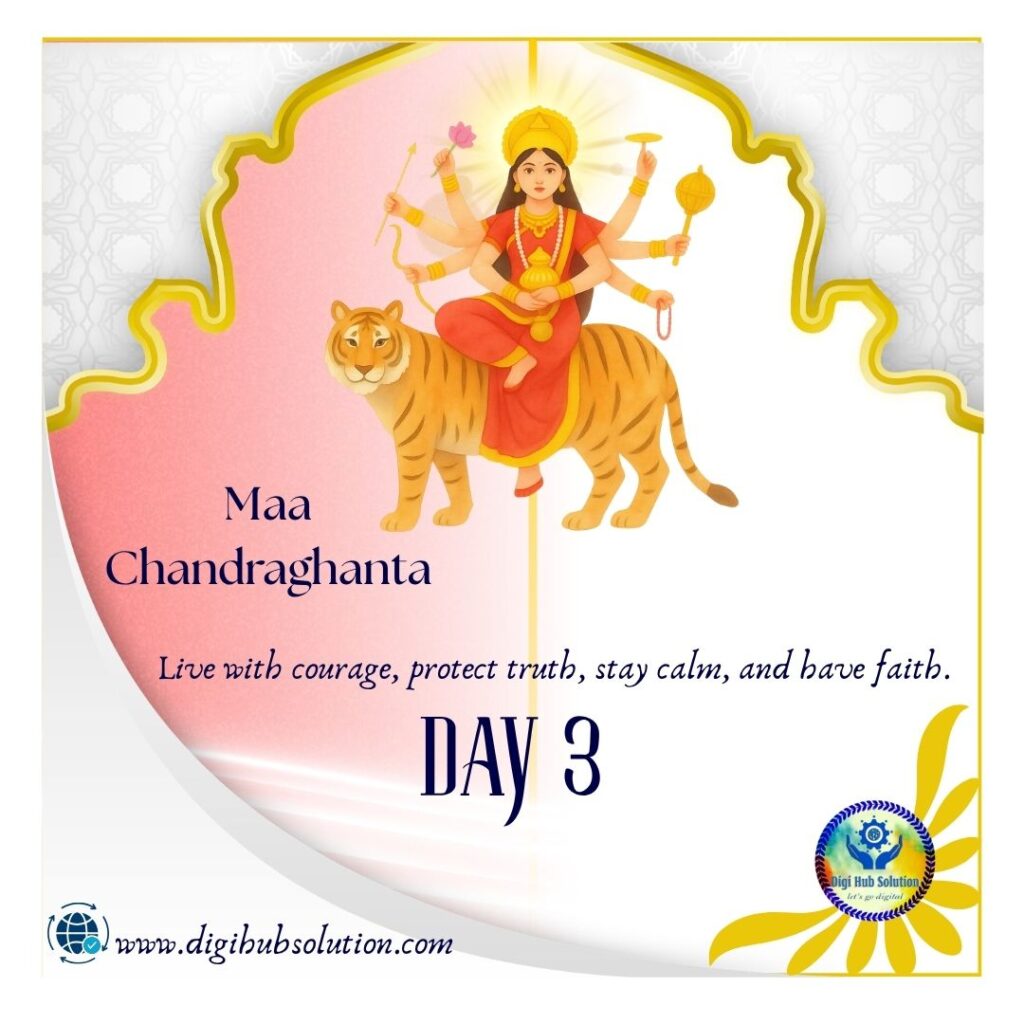
🌸 Day 3 – Maa Chandraghanta
Maa Chandraghanta is the third form of Goddess Durga, worshipped on the third day of Navratri. She is known for the crescent moon (Chandra) shaped like a bell (Ghanta) on her forehead, which gives her the name Chandraghanta. She rides a tiger and is depicted with ten hands holding various weapons, symbolizing courage and readiness to fight evil. Her fierce form protects devotees from negativity and fear, while her calm nature brings peace and harmony. Maa Chandraghanta represents bravery, grace, and balance. Worshipping her helps remove obstacles, instills confidence, and encourages devotees to face challenges with strength and determination. Maa Chandraghanta is known for her bravery and grace. She symbolizes courage and fearlessness, removing all fears and negative energies from the lives of her devotees. Worshipping her gives the strength to face challenges confidently and maintain peace and harmony in life.
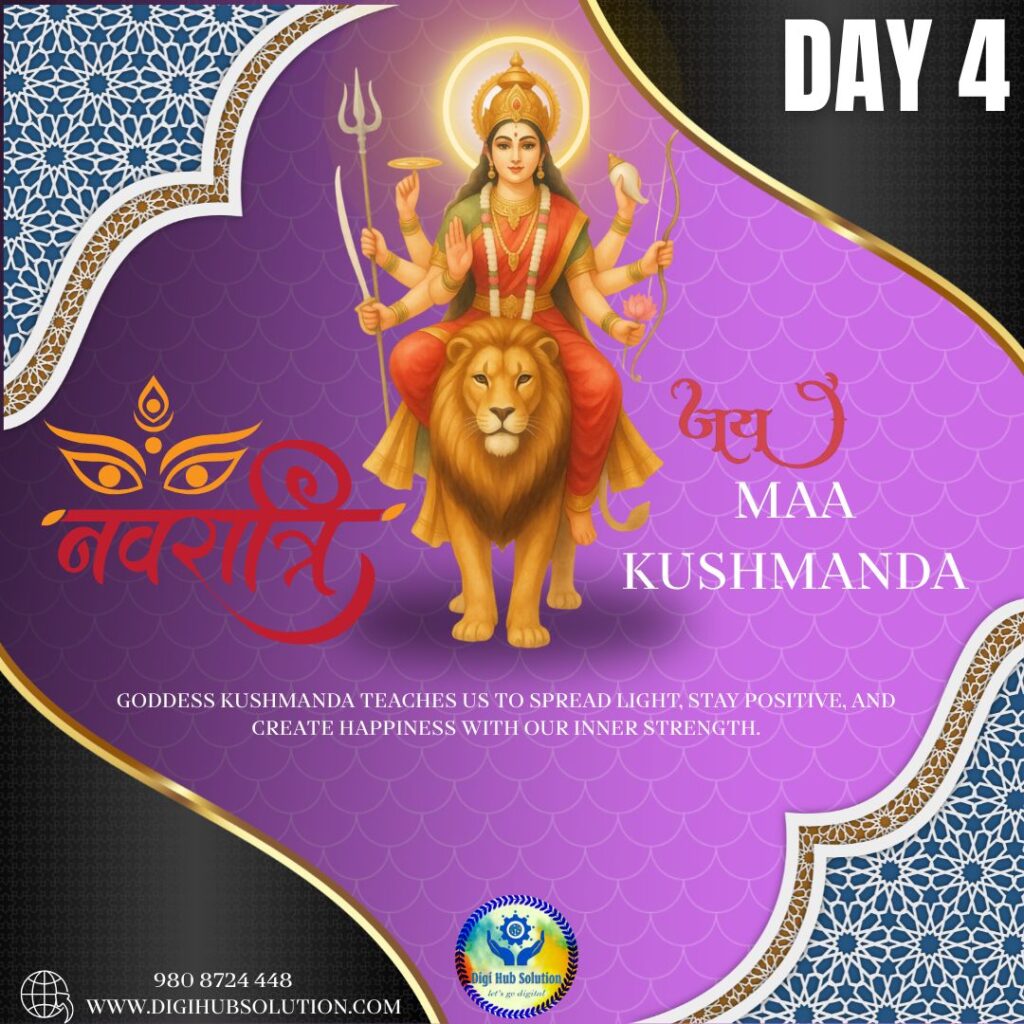
🌸 Day 4 – Maa Kushmanda
Maa Kushmanda is the fourth form of Goddess Durga, worshipped on the fourth day of Navratri. Her name comes from “Ku” (little), and “Ushma” (warmth),, symbolizing her as the creator of the universe with her divine smile. She is depicted with eight hands, holding weapons, a rosary, nectar, and a pot, and rides a lion. Maa Kushmanda represents energy, vitality, and creation. It is believed that she brought light to the universe when it was covered in darkness. Worshipping her blesses devotees with health, strength, and positivity, and removes negativity, filling life with brightness and enthu
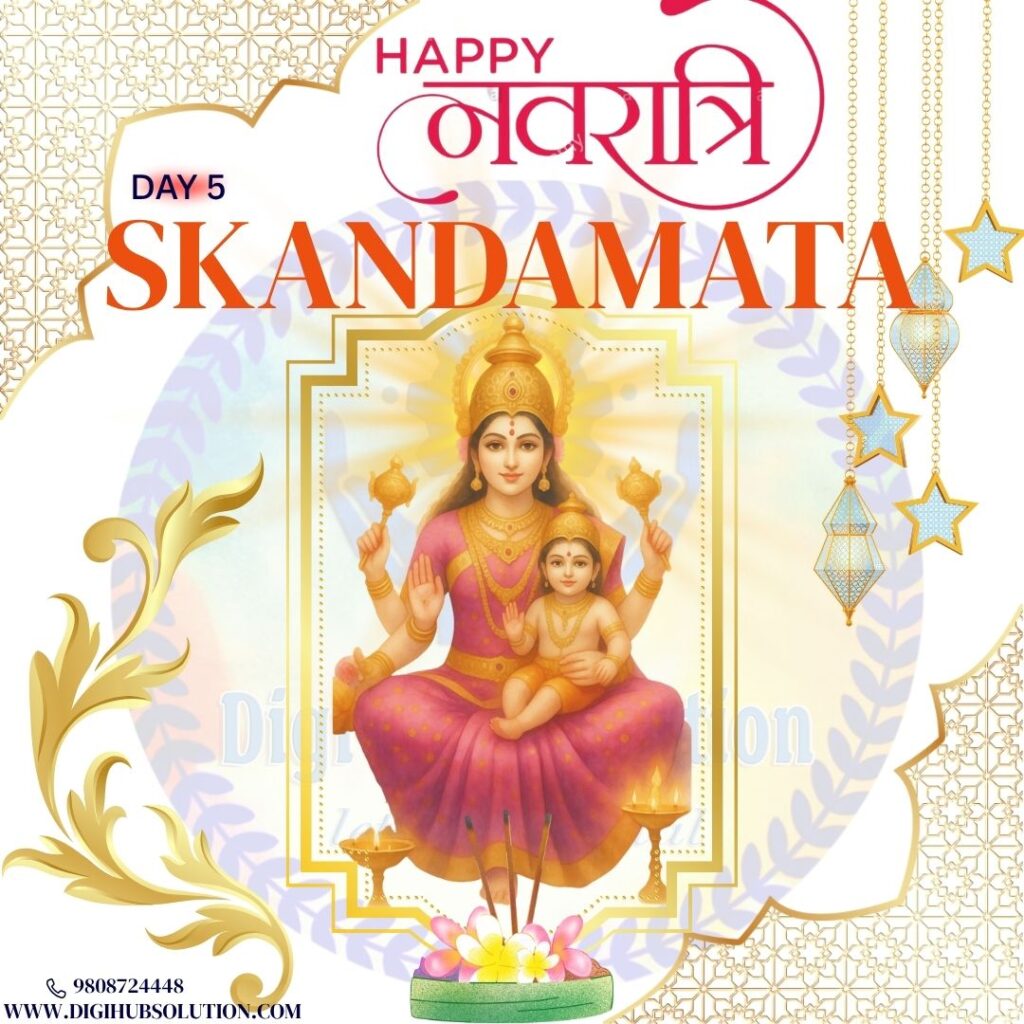
🌸 Day 5 – Maa Skandamata
Maa Skandamata is the fifth form of Goddess Durga, worshipped on the fifth day of Navratri. She is the mother of Lord Skanda (Kartikeya) . Maa Skandamata is depicted riding a lion, holding baby Skanda in her lap, and carrying lotuses in her hands. She represents motherhood, compassion, and protection. Her blessings bring wisdom, prosperity, and peace to devotees. Worshipping her not only pleases the mother but also her son, granting double blessings. She teaches the importance of love, care, and selfless devotion, guiding devotees toward spiritual growth and inner purity
🌸 Day 6 – Maa Katyayani
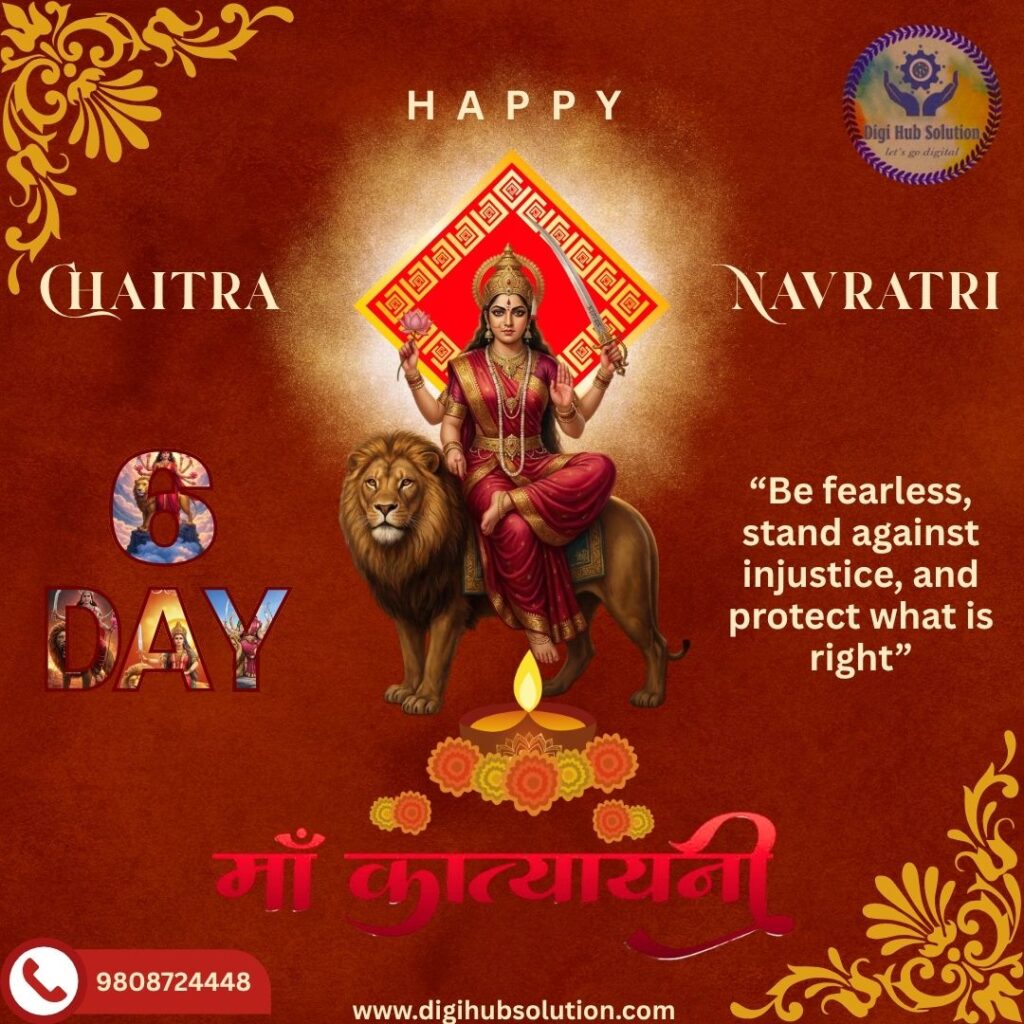
Maa Katyayani is the sixth form of Goddess Durga, worshipped on the sixth day of Navratri. She was born to sage Katyayan to destroy the demon Mahishasura. Maa Katyayani is depicted riding a lion and holding weapons in her hands, symbolizing courage and strength. She represents bravery, righteousness, and protection from evil. Worshipping her blesses devotees with courage, confidence, and success in life. She is especially worshipped by unmarried girls for a good life partner. Maa Katyayani teaches us to stand against injustice, fight negativity, and follow the path of truth and dharma with determination.
🌸 Day 7 – Maa Kalaratri
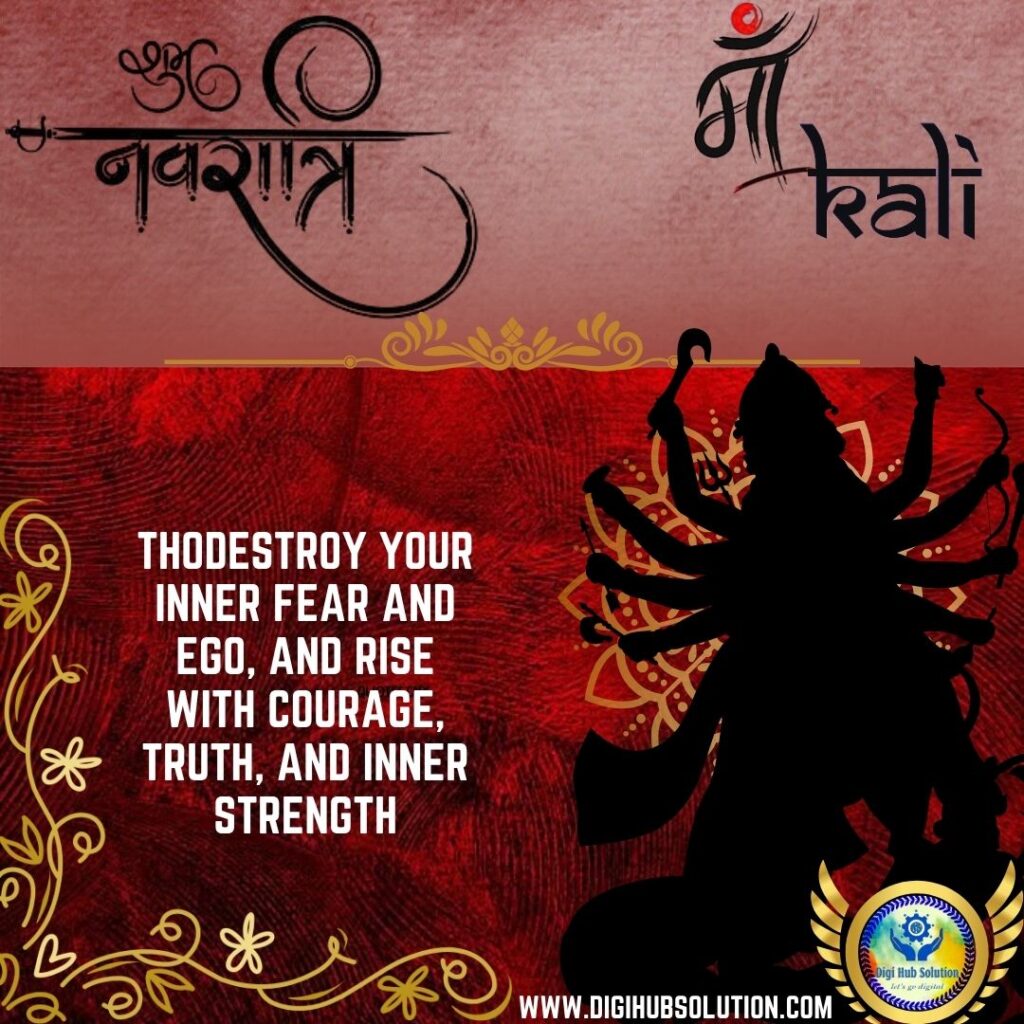
Maa Kalaratri is the seventh form of Goddess Durga, worshipped on the seventh day of Navratri. She is known as the fiercest form of the Goddess, with a dark complexion, flowing hair, and a radiant glow that destroys darkness. She rides a donkey and holds weapons while blessing her devotees with protection and fearlessness. Despite her terrifying appearance, she is called “Shubhankari”—the one who brings शुभ (good). Maa Kalaratri represents the destruction of evil, ignorance, and fear. Worshipping her removes negative energies, protects from harm, and fills life with courage, strength, and positivity
🌸 Day 8 – Maa Mahagauri
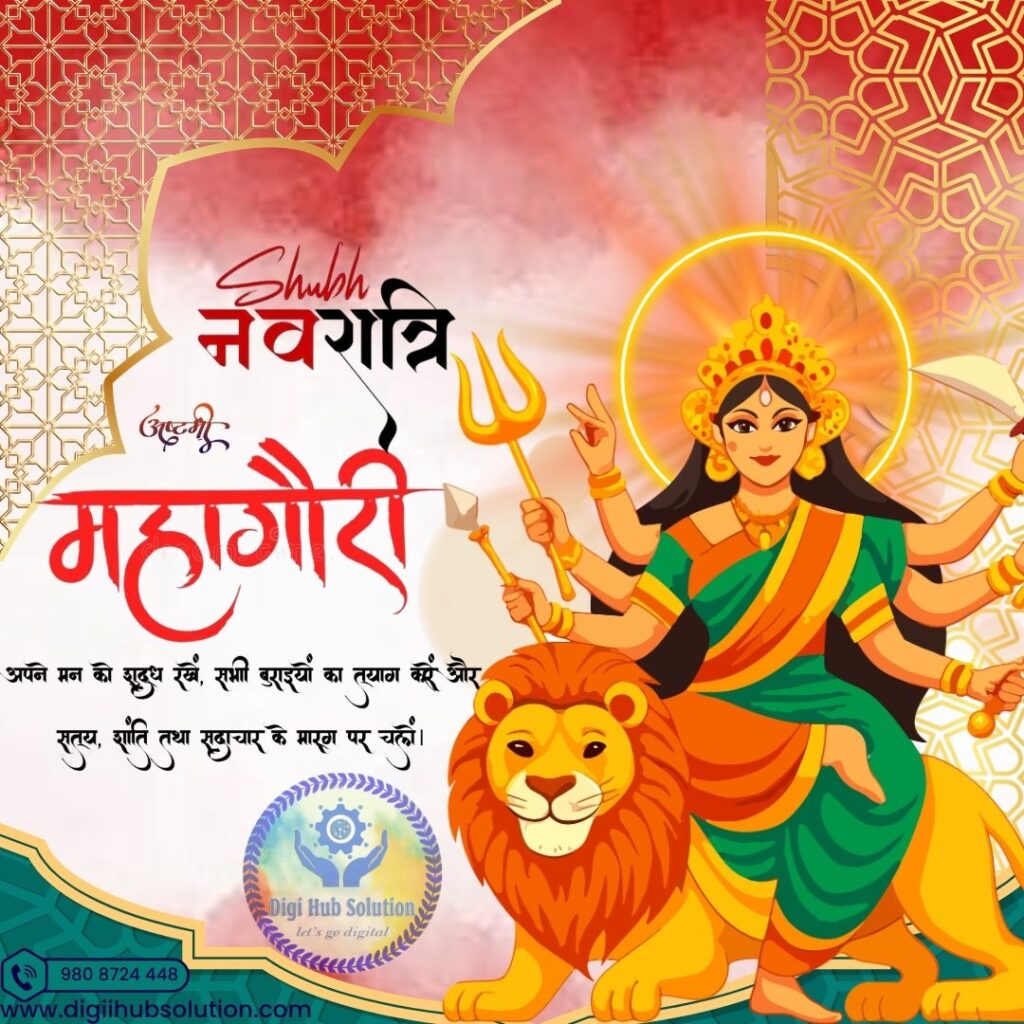
Maa Mahagauri is the eighth form of Goddess Durga, worshipped on the eighth day of Navratri. She is known for her pure white complexion, symbolizing peace, purity, and serenity. Maa Mahagauri rides a bull and is depicted with four hands, holding a trident and a damru while blessing her devotees. It is believed that after intense penance, her complexion became radiant and fair. She represents calmness, forgiveness, and spiritual purity. Worshipping her removes past sins, brings peace and prosperity, and fills life with positivity. She teaches devotees to purify their thoughts, remain kind, and move forward with inner peace and devotion.
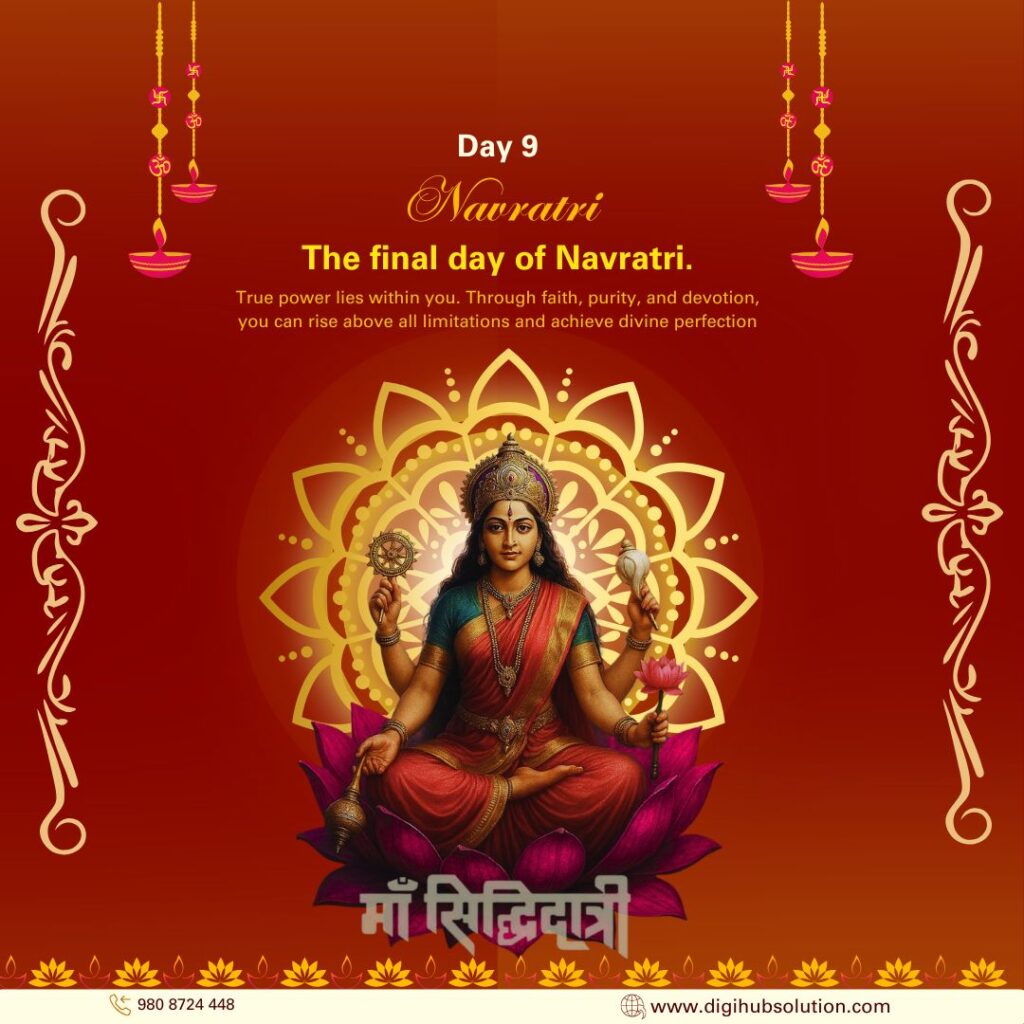
🌸 Day 9 – Maa Siddhidatri
Maa Siddhidatri is the ninth and final form of Goddess Durga, worshipped on the last day of Navratri. Her name means “the giver of siddhis (spiritual powers).” She is depicted sitting on a lotus and holds a mace, discus, conch, and lotus in her four hands. Maa Siddhidatri grants wisdom, success, and supernatural powers to her devotees. It is believed that even Lord Shiva received siddhis through her blessings. She represents perfection, fulfillment, and divine knowledge. Worshipping her brings spiritual enlightenment, removes ignorance, and helps devotees achieve success in all aspects of life with faith and devotion
Message of Navratri
Navratri is a sacred festival dedicated to the nine forms of Goddess Durga, symbolizing the victory of good over evil and light over darkness. It teaches us to remove negativity from our lives and awaken our inner strength through faith and devotion. The festival inspires us to stay strong during challenges, follow the path of truth and righteousness, and believe in our inner power. Navratri also reminds us to respect and honor divine feminine energy. Overall, its message is that with courage, purity, and determination, we can overcome any obstacle and lead a positive and successful life.